How to Get a Free Phone for Seniors on Medicaid (2026 Guide)
Managing healthcare appointments, tracking daily prescriptions, and staying prepared for medical emergencies can be challenging on a fixed retirement income. You shouldn’t have to choose between paying for groceries and keeping your cell phone service active.
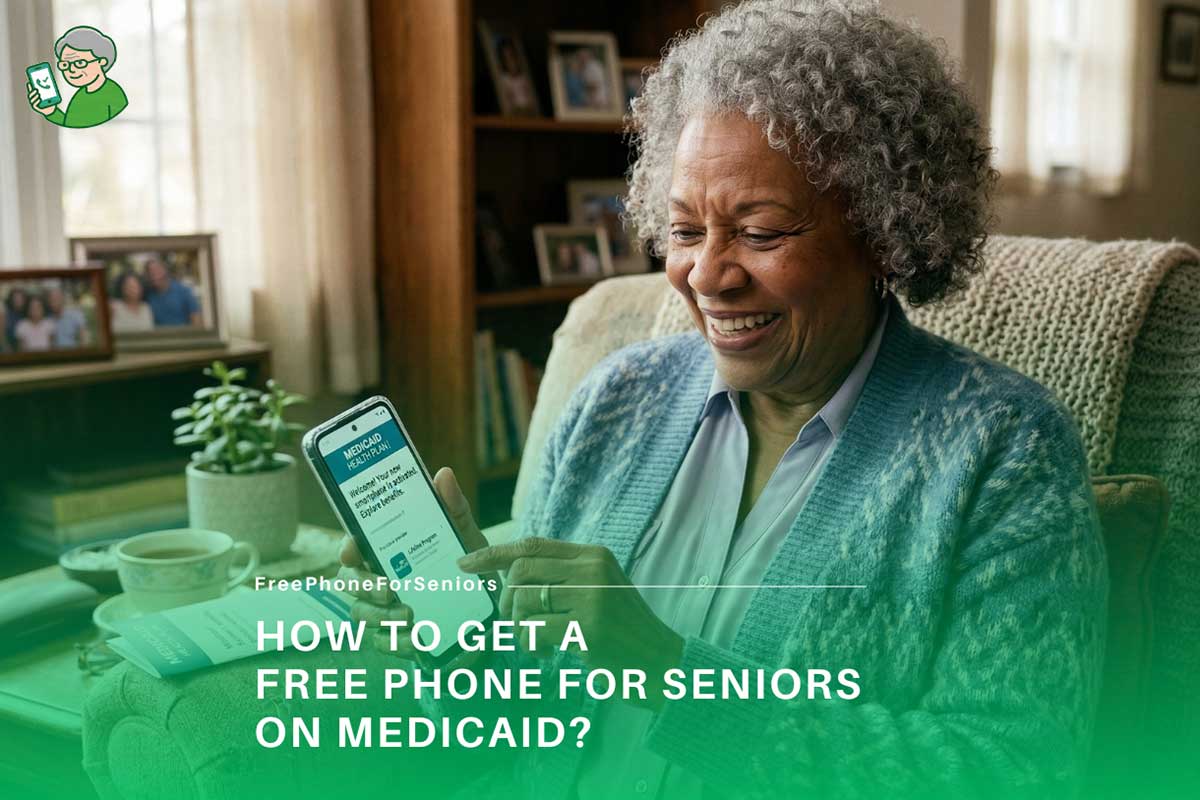
If you are wondering if there is a free phone for seniors on Medicaid, the answer is a definitive yes. Being enrolled in Medicaid is actually the fastest and most direct way to automatically qualify for a free government smartphone or a monthly phone bill discount through the federal Lifeline program.
Important 2026 Note: While the temporary Affordable Connectivity Program (ACP) ended in 2024, the permanent Lifeline program remains fully active to help low-income older adults stay connected.
How Medicaid Qualifies You for the Lifeline Program
The Lifeline program is a long-standing federal initiative managed by the Federal Communications Commission (FCC). Its core purpose is to make communication services affordable for low-income households.
For a comprehensive overview of how this federal program operates, read our complete guide to getting a government free phone for seniors.
When applying for Lifeline, many people must submit tax returns or pay stubs to prove that their household income falls below the 135% Federal Poverty Guideline. However, Medicaid serves as an “automatic qualifier.” Because your state government has already verified your financial need when approving your Medicaid health coverage, the federal government fast-tracks your Lifeline phone approval. You simply need to prove you are actively enrolled.
What Benefits Do Seniors on Medicaid Actually Receive?
It is a common misconception that the federal government directly mails phones to older adults. Instead, the Lifeline program provides a monthly subsidy to participating private telecommunications companies, who then offer you the free service.
By using your Medicaid status to apply, you can typically choose one of two primary benefits:
- A Free Device and Plan: You can receive a fully subsidized mobile plan that includes a free basic smartphone or flip phone, along with a monthly allowance of free talk time, text messages, and mobile data. Under current FCC regulations, which run through December 2026, providers must offer at least 4.5 GB of mobile data per month.
- A Monthly Bill Discount: If you already have a mobile phone or home landline service that you prefer to keep, you can apply a discount of up to $9.25 per month directly to your existing bill.
- Tribal Lands Bonus: If you are an eligible senior living on federally recognized Tribal lands, the monthly discount is significantly enhanced, providing up to $34.25 per month toward your phone service.
Required Documents: Proving Your Medicaid Status
To prevent program fraud, the FCC requires strict identity and eligibility verification. Before starting your application, you must gather documents that prove you are a living, lawful beneficiary actively enrolled in Medicaid.
You will need to provide copies of the following paperwork:
- Proof of Identity: Your unexpired state ID, driver’s license, U.S. passport, or Social Security card.
- Proof of Medicaid Enrollment: Your official, active Medicaid card, a recent Medicaid approval letter, or an official state benefits statement dated within the last 12 months.
The Golden Rule of Paperwork: If you choose to mail a physical application, never send your original identification or Medicaid cards. Always send clear, legible copies.
The 2026 Application Process for Medicaid Free Phone: Step-by-Step
Getting a free phone for seniors on Medicaid is straightforward, but it requires following the proper official channels. In 2026, the FCC implemented stricter identity verification to prevent fraud, so taking your time to apply correctly is highly recommended.
Step 1: Use the National Verifier
The safest way to begin your application is through the official U.S. government portal, the National Verifier. You can access this secure system by visiting LifelineSupport.org.
Step 2: Choose Your Application Method
You have three secure options to submit your application and Medicaid proof:
- Apply Online: The fastest route. By creating an account on the National Verifier website and uploading clear photos of your ID and Medicaid card, you can often receive an approval decision in minutes.
- Apply by Mail: You can print a paper application directly from the LifelineSupport website. Fill it out completely and mail it to the Lifeline Support Center, along with copies of your documents.
- Apply Through a Provider: Many seniors find it much easier to apply directly through a participating phone company. Authorized companies can help you submit your National Verifier application and sign you up for their specific phone service at the same time.
Step 3: State-Specific Exceptions
While the National Verifier handles applications for most of the country, a few states manage their own Lifeline programs. If you live in Texas or Oregon, you will be redirected to use your state’s specific portal.
Crucial California Update: If you live in California, the rules are slightly different. The California LifeLine program often offers higher subsidies. However, residents must now navigate specific state enrollment processes to get the maximum benefit. [Internal Link: California Free Phone Guide]
Top Lifeline Providers for Medicaid Recipients
Once the government approves your Lifeline eligibility based on your Medicaid status, you must select a private telecommunications company to actually provide the phone and the cellular service.
Several major national carriers specialize in Lifeline services, including:
- Assurance Wireless
- SafeLink Wireless
- Life Wireless
Pro-Tip for Seniors on Medicaid: In certain states, specific Medicaid health insurance plans partner directly with select phone carriers to offer extra perks. For example, some Medicaid managed care plans may offer unlimited text messaging or bonus data if you choose their preferred provider.
To compare the top carriers and see which one offers the best coverage in your area, read our complete breakdown of the best free cell phone service for seniors. [Internal Link: Best Free Cell Phone Service Plans for Seniors]
Crucial Rules to Keep Your Free Phone Active
Getting approved is only the first step. To ensure your phone service is not unexpectedly disconnected, you must follow three strict FCC rules:
- The “One Per Household” Rule: The government only allows one Lifeline discount per household economic unit. If you share an address with another adult who already receives a Lifeline phone, you must complete a Household Worksheet to prove you manage your finances separately.
- The 30-Day Usage Rule: If your service is completely free, you must use your phone at least once every 30 days. Making a phone call, sending a text message, or using mobile data while disconnected from Wi-Fi all count as usage. If your phone sits unused in a drawer for more than 30 days, your provider is legally required to deactivate your service.
- Annual Recertification: Your benefit does not automatically last forever. You must recertify your Lifeline eligibility every year to prove you are still enrolled in Medicaid. Your provider or the Universal Service Administrative Company (USAC) will contact you when it is time to renew.
