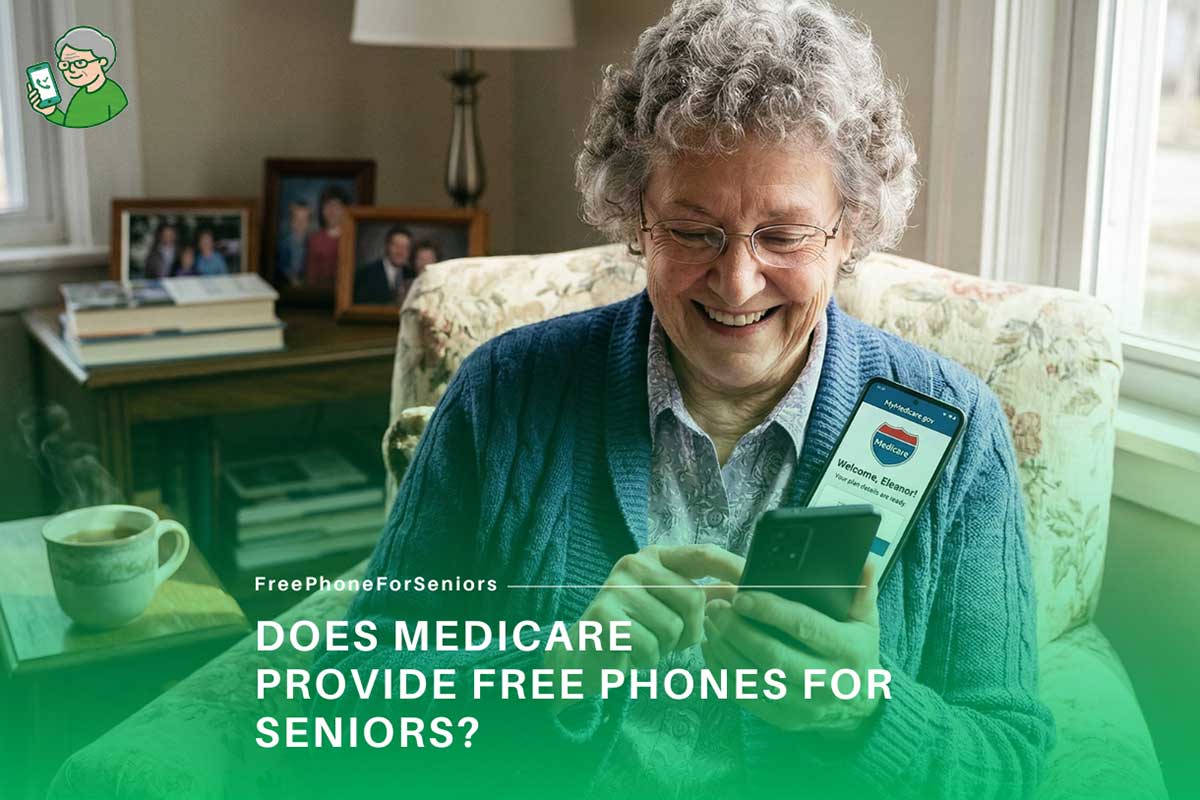
If you are a senior living on a fixed income, you may have seen ads or gotten calls about a “Medicare free phone.” It seems like a great way to stay connected with your doctors and family.
Let’s clear up the confusion right away: Having Medicare by itself does not qualify you for a free government phone. The Federal Communications Commission (FCC) runs the Lifeline program, and they do not accept Medicare as a way to qualify.
If you are looking for a free phone for seniors on Medicare, don’t worry. Many people with Medicare still get free phones each year, but they qualify in other ways. This guide will clear up the myths, help you avoid scams, and show you how to get a phone legally.
The Big Mix-Up: Medicare vs. Medicaid
To see why there is no Medicare free phone for seniors, it helps to know how the government treats these two different health programs.
- What is Medicare? Medicare is an age-based federal health insurance program. Anyone who turns 65 years old (or has certain disabilities) is eligible for Medicare, regardless of how much money they have in the bank. Because millionaires and low-income seniors both get Medicare, the FCC cannot use it to determine who actually needs financial help paying for a cell phone.
- What is Medicaid? Medicaid, on the other hand, is a joint state-federal program based solely on financial need. Because Medicaid eligibility indicates low income, it is the primary automatic qualifier for the government’s Lifeline phone program.
If you have Medicaid, you are already one step closer to getting your device. Here is the process to get a Free Phone for Seniors on Medicaid.
How Seniors on Medicare Can Still Get a Free Phone
Even though your Medicare card alone won’t get you a free phone, you are not disqualified. If you have Medicare, you can still use the Lifeline program if you meet one of these three requirements.
1. You Have “Dual Eligibility” (Medicare + Medicaid)
Millions of seniors are considered “dual-eligible.” This means you get Medicare because of your age and Medicaid because of your income. If you have both cards, use your Medicaid card to apply for Lifeline, and you will be approved automatically.
2. You Meet the 2026 Income Guidelines
If you only have Medicare, you can still get a free phone if your household income is low enough. The FCC says anyone whose income is at or below 135% of the Federal Poverty Guidelines can qualify for Lifeline.
Below are the official 2026 income limits for the 48 states and Washington, D.C.:
|
Household Size |
Maximum Annual Income (135% FPG) |
|---|---|
|
1 Person |
$21,546 |
|
2 People |
$29,214 |
|
3 People |
$36,882 |
|
4 People |
$44,550 |
(Note: Income limits are slightly higher in Alaska and Hawaii due to the cost of living).
If you fall below these numbers, you can qualify using your tax returns or Social Security benefits statements instead of a Medicaid card. So here is a guide to getting a Free Government Phone for Seniors.
3. You Receive Other Government Benefits
If your income is just above the 135% poverty line and you do not have Medicaid, you might still qualify for Lifeline if you are part of other federal assistance programs.
If you have Medicare for health coverage and also get any of the following benefits, you are automatically approved for a free phone:
- Supplemental Security Income (SSI)
- Supplemental Nutrition Assistance Program (SNAP / Food Stamps)
- Federal Public Housing Assistance (FPHA / Section 8)
- Veterans Pension and Survivors Benefit
Just provide your award letter from any of these programs when you apply.
Beware of “Medicare Free Phone” Scams
Because government assistance rules can be confusing, scammers often target older adults. This is a serious problem, so it is important to protect your personal information.
How the Scam Works: You might get a robocall, text, or see an online ad offering a Medicare free phone for seniors. The caller may sound official and say they need your Medicare ID or Social Security Number to process your “free phone.”
The Truth: These scammers want to steal your identity and commit medical fraud. The federal government, the FCC, and Medicare will never call you unexpectedly to offer a cell phone.
What to Do: If someone calls offering a free phone in exchange for your Medicare number, hang up right away. Never give your Medicare ID, Social Security Number, or bank information to someone who calls you. Only share your information with the official National Verifier website or a certified phone provider.
Next Steps: Where to Actually Apply
Now that you know you need to qualify through low-income or other programs, you can safely start the real application process for a free phone as a senior on Medicare.
- Gather Your Documents: Collect proof of identity, like a State ID or Driver’s License, and proof of eligibility, such as a tax return, three months of pay stubs, an SSI award letter, or a SNAP card. Do not use your Medicare card, as it will not be accepted.
- Apply Officially: Visit LifelineSupport.org, the official U.S. government site, to submit your application securely through the National Verifier.
- Choose a Provider: After your eligibility is approved, pick a private phone company to send you the device and provide service. We have reviewed the best options in our guide to top carriers. [Internal Link: Best Free Cell Phone Service Plans for Seniors]
